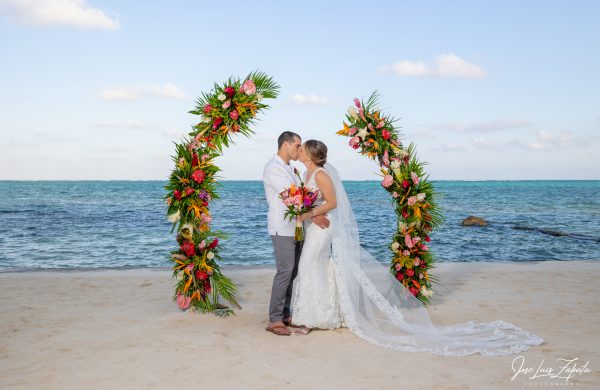
When it comes to planning a wedding reception, the table layout plays a pivotal role in shaping the mood, guest experience, and overall aesthetic. While the floral arrangements, color palette, and menu set the scene, the way your tables are arranged will dictate how guests interact, move around, and enjoy the festivities. Let’s explore some popular table layout styles and discover which one might suit your wedding vision best.
Family Style
This image is based on an authentic Dulce Belize Weddings setup in San Pedro, Belize. AI was used only to enhance the clarity and presentation of the original photograph while preserving the real setting and design.
This setup involves long, rectangular tables where guests sit side-by-side, creating an intimate and communal atmosphere.
Best For: Smaller, cozy weddings or receptions aiming for a homely vibes
Pros: Encourages conversation across the table, gives a casual and warm feel, and is ideal for sharing food platters or communal meals.
Cons: May not be suitable for larger guest lists as it limits the number of people per table.
U-Shape
Tables are arranged in a U-formation, with the bride, groom, and close family often seated at the head.
Best For: Medium-sized receptions that want to combine intimacy with a more formal dining experience.
Pros: Creates a focal point at the open end of the U, ideal for speeches and toasts. Allows the bridal party to face the guests directly.
Cons: Can make the room feel segregated if not properly balanced with additional decor.
Photo by: Haydee Lu Photography
Circular / Round
Photography by: Jose Luis Zapata
The classic round table is a timeless option, often seating 8-10 guests per table.
Best For: Large receptions that want to encourage guest interaction and conversation.
Pros: Offers flexibility in terms of guest seating, allows clear sightlines across the table, and suits most wedding themes.
Cons: Requires more floor space and can create isolated groupings.
Square Tables
Square tables are a modern alternative to the classic round table, providing a contemporary look.
Best For: Receptions with a mix of styles and smaller guest lists.
Pros: Offers a unique aesthetic, allows for a good mix of conversations, and pairs well with modern decor.
Cons: Like round tables, it takes up significant floor space.
Image: AI Generated for illustration purposes only
Banquet Style
Image: AI Generated for illustration purposes only
Often referred to as “King’s Table,” this involves one long table where guests are seated on both sides, sometimes with the couple positioned in the middle.
Best For: Elegant weddings with a strong focus on family and close relationships.
Pros: Creates a dramatic effect, allows guests to interact more freely, and is great for elaborate table decorations.
Cons: Can feel crowded if too many guests are squeezed into the arrangement.
Mix & Match
A creative blend of different table styles, often used to accommodate various family dynamics or room shapes.
Best For: Large weddings with different family groups or where space needs to be creatively utilized.
Pros: Adds visual interest to the reception, can accommodate different guest numbers at each table, and creates a more dynamic flow.
Cons: Requires careful planning to ensure a cohesive look.
Your wedding table layout should reflect your personal style and help bring your vision to life. Whether you’re aiming for an intimate gathering or a grand celebration, consider the guest list, venue size, and overall theme to find the perfect table layout that will foster connection and create lasting memories.